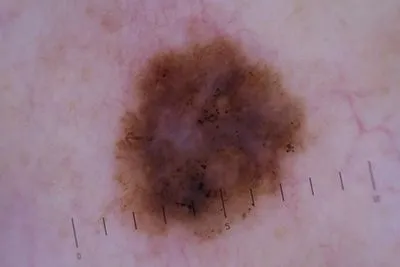
Melanoma is the most serious form of skin cancer, developing when pigment-producing cells called melanocytes grow uncontrollably. Though it accounts for a smaller percentage of skin cancer cases, melanoma poses a higher risk of spreading to other parts of the body if not caught early. At Tri-Valley Dermatology, with offices in Hemet and Murrieta, CA, Dr. Steve S. Oberemok and Cyrus Querol, PA-C, offer expert evaluation and personalized treatment options to help patients detect and manage melanoma with confidence.
What Is Melanoma?
Melanoma typically begins as an unusual mole or pigmented lesion on the skin, but it can also appear in areas not commonly exposed to the sun, including under nails or in mucous membranes. While sun exposure is a major risk factor, genetics, skin type, and a history of sunburns also play a role in developing this aggressive form of skin cancer.
Early detection is critical. When identified in its early stages, melanoma is highly treatable. However, delayed diagnosis can lead to spread (metastasis) and more complicated treatment outcomes.
Warning Signs of Melanoma
The ABCDE rule is commonly used to help identify suspicious skin changes:
A – Asymmetry: One half of the mole doesn’t match the other
B – Border: Edges are irregular, blurred, or ragged
C – Color: Multiple shades of brown, black, or other colors
D – Diameter: Larger than 6 mm (about the size of a pencil eraser)
E – Evolving: Any change in size, shape, color, or elevation
If you notice any of these signs, it’s important to seek evaluation from a qualified dermatologist.
How Melanoma Is Diagnosed
At Tri-Valley Dermatology, Dr. Oberemok begins with a thorough skin examination. If a lesion appears suspicious, a biopsy is performed to confirm whether cancerous cells are present. If melanoma is diagnosed, additional testing may be recommended to determine the stage and guide treatment decisions.
Melanoma Treatment Options
Treatment depends on the depth, location, and stage of the melanoma. Common options include:
Surgical excision – The primary treatment for early-stage melanoma, involving complete removal of the lesion and surrounding tissue.
Sentinel lymph node biopsy – Used to check if the cancer has spread beyond the skin.
Immunotherapy or targeted therapy – Recommended for advanced melanoma to help the body’s immune system recognize and attack cancer cells.
Follow-up monitoring – Ongoing skin checks to detect recurrence or new lesions.